
1.4 Types of Business Organisation: Cambridge IGCSE Business 0264 lesson
1.4 Types of Business Organisation is one of the 5 lessons in Unit 1 Understanding Business Activity of Cambridge IGCSE Business 0264, for first examination in 2027. It is an editable PowerPoint of 44 slides written against syllabus section 1.4.1, with 2 embedded video case studies, 3 learning checks and an exit ticket. Also suitable for Cambridge IGCSE (9-1) Business 0774 and Cambridge O Level Business 7081, which share the same content.
Sole traders through to public limited companies, then franchises with a video on how franchising works and a case study on The Coffee Bean and Tea Leaf, which grew to over 1,200 stores through a franchise model. Social enterprises in Malaysia are the third case. Four scenario slides at the end ask students to recommend and justify a structure for a given business, the skill Paper 2 rewards.
Learning objectives
Taken from the objectives slide of the lesson, which follows the syllabus wording.
1.4.1 Different types of business organisation
- sole traders, partnerships, private limited companies and public limited companies
- advantages and disadvantages of different types of business organisation
- recommend and justify a suitable type of business organisation to owners/management for a given situation
- different forms of business organisation: franchises, joint ventures, social enterprises
- advantages and disadvantages of franchises for the franchisor and franchisee
- advantages and disadvantages of joint ventures
What is in the lesson
The running order below is the deck as sold. Every lesson in the course follows the same shape: learning objectives, content slides with the real business examples, a learning check after each section, a case study with questions, key takeaways and an exit ticket. A teacher answer key (PDF), with model answers to every learning check, case question and exit ticket, is included when you buy the unit or the complete course.
Slide by slide (44 slides)
- Title slide
- Learning Objectives
- The Big Picture: Business Ownership
- Unincorporated Businesses: Sole Traders
- Unincorporated Businesses: Partnerships
- Unlimited Liability: The Risk Factor
- Incorporated Businesses: Overview
- Private Limited Companies
- Public Limited Companies
- Limited Liability: Reduced Risk
- Benefits of Incorporated Businesses
- Limitations of Incorporated Businesses
- Learning Check
- Franchises: An Alternative Model
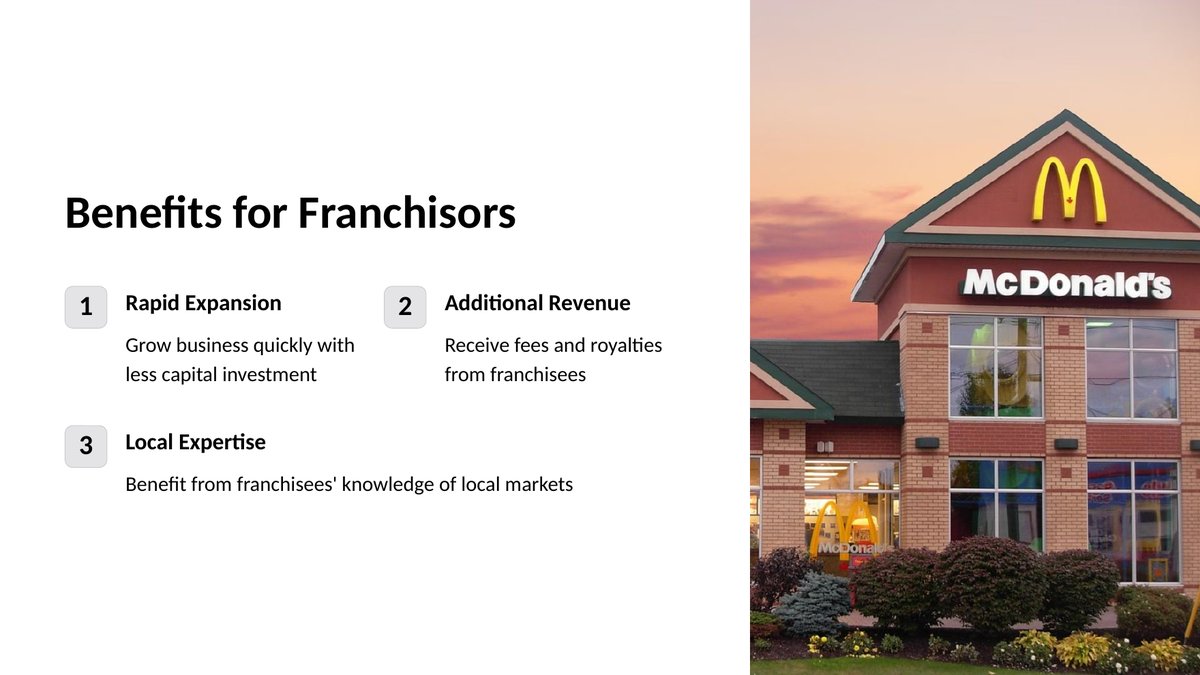
- Benefits for Franchisors
- Question: What are the main advantages and disadvantages of owning a McDonald's… (video)
- Benefits for Franchisees
- Limitations of Franchising
- Case Study: The Coffee Bean and Tea Leaf
- Question: The Coffee Bean and Tea Leaf expanded using a franchise model. (video)
- Joint Ventures: Collaborative Growth
- Benefits of Joint Ventures
- Limitations of Joint Ventures
- Social Enterprises
- Aims of Social Enterprises
- Case Study: Social Enterprises in Malaysia
- Learning Check
- Factors Affecting Business Ownership Choice
- Control vs. Business Size
- Finance Needs and Business Structure
- Risk and Liability Spectrum
- Growth Plans and Business Structure
- Choosing the Right Structure: Scenario 1
- Choosing the Right Structure: Scenario 2
- Choosing the Right Structure: Scenario 3
- Choosing the Right Structure: Scenario 4
- Learning Check
- Key Takeaways: Unincorporated Businesses
- Key Takeaways: Incorporated Businesses
- Key Takeaways: Alternative Structures
- Factors to Consider When Choosing
- The Importance of Choosing Wisely
- Conclusion: Matching Structure to Vision
- Exit Ticket
Where it fits
Week 5 of the 0264 scheme of work and pacing guide, which gives the course 46 weeks with a mock in week 41. Previous lesson: 1.3 Enterprise, Business Growth and Size. Next lesson: 1.5 Business and Stakeholder Objectives. All 28 lessons: Cambridge IGCSE Business 0264.
How to buy
The lesson on its own: 1.4 Types of Business Organisation on TES. The unit: Unit 1 Understanding Business Activity. The whole course in one download: 0264 Complete Bundle. Lesson 1.1 is free with its answer key if you want to see the format first.