

1.3 Enterprise, Business Growth and Size: Cambridge IGCSE Business 0264 lesson
1.3 Enterprise, Business Growth and Size is one of the 5 lessons in Unit 1 Understanding Business Activity of Cambridge IGCSE Business 0264, for first examination in 2027. It is an editable PowerPoint of 40 slides written against syllabus sections 1.3.1, 1.3.2, 1.3.3 and 1.3.4, with 2 embedded video case studies, 4 learning checks and an exit ticket. Also suitable for Cambridge IGCSE (9-1) Business 0774 and Cambridge O Level Business 7081, which share the same content.
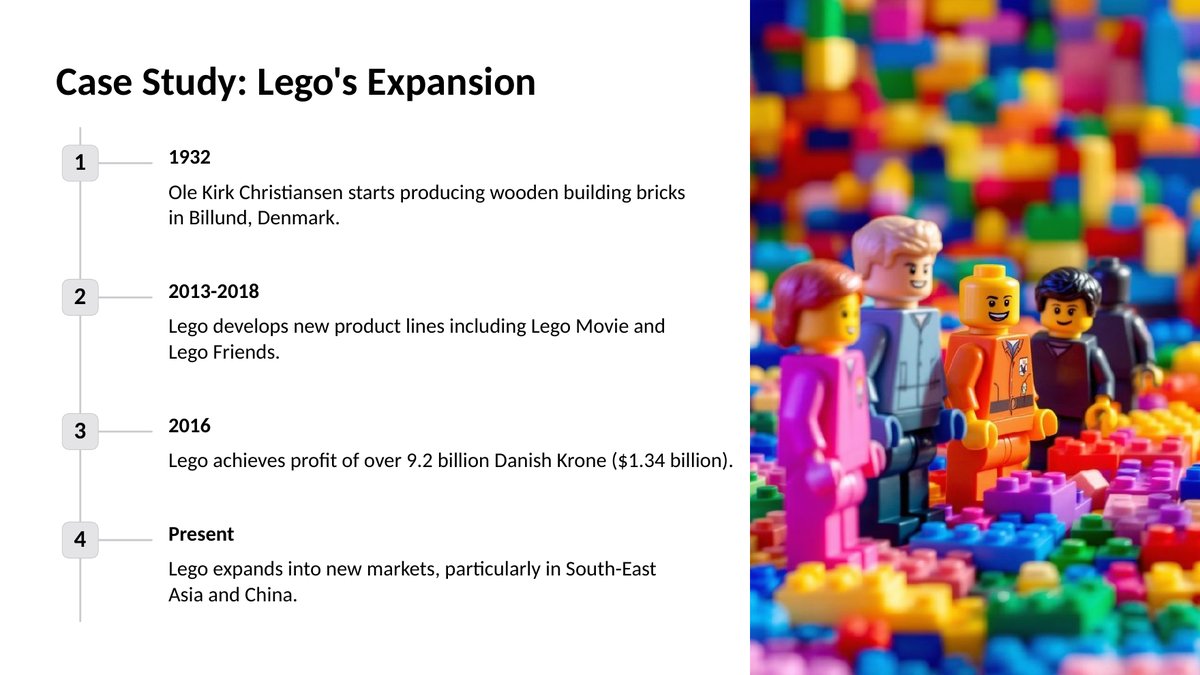
Two video case studies carry the lesson: Google, for what successful entrepreneurs do at each stage of growth, and Lego, for how a toy maker expanded into films and new markets. Kodak is the failure case. Business size is measured the EU way (employees, output, capital employed), and the lesson ends on why some businesses succeed and others fail, which is new in the 0264 syllabus.
Learning objectives
Taken from the objectives slide of the lesson, which follows the syllabus wording.
1.3.1 Enterprise and entrepreneurship
- characteristics of successful entrepreneurs
- purpose and key elements of a business plan: overview/summary, objectives, resources, market research, marketing, finance, people, operations
- the importance of having a business plan
- why governments support business start-ups
- how governments support business start-ups, e.g. grants, advice, low-cost loans, training schemes
1.3.2 The methods and problems of measuring business size
- methods of measuring business size, e.g. number of people employed, value of output/sales, volume of output/sales, capital employed (profit is not a method of measuring business size)
- problems when measuring business size
1.3.3 Why some businesses grow and others remain small
- why the owners of a business may want to grow the business
- how and why businesses can grow internally, e.g. develop new products, develop new markets
- how and why businesses can grow externally: mergers and takeovers, including horizontal integration, vertical integration
- advantages and disadvantages of methods of growth
- problems linked to business growth
- why some businesses remain small
1.3.4 Why some businesses succeed and others fail
- reasons why businesses succeed or fail, e.g. management skills, availability of finance, suitability of product, demand for products, changes in the economy, level of competition
What is in the lesson
The running order below is the deck as sold. Every lesson in the course follows the same shape: learning objectives, content slides with the real business examples, a learning check after each section, a case study with questions, key takeaways and an exit ticket. A teacher answer key (PDF), with model answers to every learning check, case question and exit ticket, is included when you buy the unit or the complete course.
Slide by slide (40 slides)
- Title slide
- Learning Objectives
- Learning Objectives
- The Big Picture: Evolution of Business
- Google: A Modern Success Story
- Question: What key decisions helped Google succeed at each stage of its growth? (video)
- Characteristics of Successful Entrepreneurs
- Key Elements of a Business Plan
- Benefits of Business Plans
- Government Support for Entrepreneurs
- Types of Government Support
- Learning Check
- Measuring Business Size: Key Methods
- EU Measures of Business Size
- Measuring Business Size: Number of Employees
- Measuring Business Size: Value of Output
- Measuring Business Size: Capital Employed
- Limitations of Size Measures
- Learning Check
- Why Businesses Choose to Expand
- Methods of Business Growth
- Internal Growth
- External Growth: Mergers vs Takeovers
- Internal vs External Growth
- Types of Integration
- Horizontal Integration Example
- Vertical Integration Example
- Case Study: Lego's Expansion
- Questions: How did Lego transform from a toy manufacturer into a global entertainment… (video)
- Problems Caused by Business Growth
- Overcoming Growth Challenges
- Why Some Businesses Choose to Remain Small
- Learning Check
- Why Some Businesses Fail
- Case Study: Kodak's Failure
- Why Some Businesses Succeed
- The Importance of Adaptability
- Learning Check
- Key Takeaways
- Exit Ticket
Where it fits
Weeks 3 and 4 of the 0264 scheme of work and pacing guide, which gives the course 46 weeks with a mock in week 41. Previous lesson: 1.2 Economic Sectors. Next lesson: 1.4 Types of Business Organisation. All 28 lessons: Cambridge IGCSE Business 0264.
How to buy
The lesson on its own: 1.3 Enterprise, Business Growth and Size on TES. The unit: Unit 1 Understanding Business Activity. The whole course in one download: 0264 Complete Bundle. Lesson 1.1 is free with its answer key if you want to see the format first.