

3.2 Market Research: Cambridge IGCSE Business 0264 lesson
3.2 Market Research is one of the 4 lessons in Unit 3 Marketing of Cambridge IGCSE Business 0264, for first examination in 2027. It is an editable PowerPoint of 32 slides written against syllabus section 3.2.1, with 2 embedded video case studies, 0 learning checks and an exit ticket. Also suitable for Cambridge IGCSE (9-1) Business 0774 and Cambridge O Level Business 7081, which share the same content.
Primary and secondary methods with the benefits and limitations of each, sampling, and what affects accuracy. A five-slide section on analysing data (tables, bar charts, pie charts, line graphs, then practice) covers the syllabus requirement to draw conclusions from simple market research data. Two video case studies: JD Sports, which uses exit surveys, competitor surveys and customer interviews, and innocent drinks, whose first market research was a bin marked yes and a bin marked no at a music festival.
Learning objectives
Taken from the objectives slide of the lesson, which follows the syllabus wording.
3.2.1 Methods of market research
- Why businesses use market research
- Advantages and disadvantages of primary and secondary market research methods
- Primary research methods, e.g. questionnaires or surveys, interviews, focus groups, observation
- Secondary research methods, e.g. competitor websites, government sources, market reports, trade magazines
- Factors influencing the accuracy of market research data
- The concept of sampling and why it is useful to businesses
- Analyse simple market research data and draw conclusions from it
What is in the lesson
The running order below is the deck as sold. Every lesson in the course follows the same shape: learning objectives, content slides with the real business examples, a learning check after each section, a case study with questions, key takeaways and an exit ticket. A teacher answer key (PDF), with model answers to every learning check, case question and exit ticket, is included when you buy the unit or the complete course.
Slide by slide (32 slides)
- Title slide
- Learning Objectives
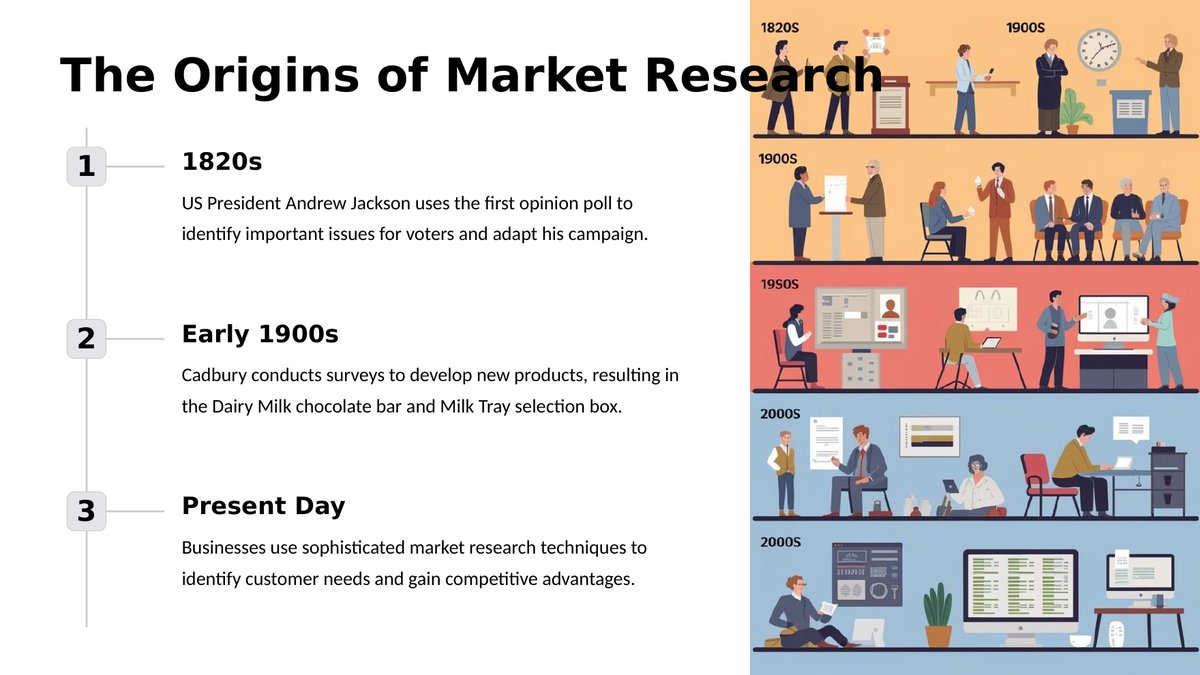
- The Origins of Market Research
- Benefits of Market Research
- Primary Market Research
- Benefits of Primary Research
- Limitations of Primary Research
- Methods of Primary Market Research
- Observation
- The Need for Sampling
- Secondary Market Research
- Benefits of Online Sources
- Limitations of Online Sources
- Benefits of Government Sources
- Limitations of Government Sources
- Benefits of Market Reports
- Limitations of Market Reports
- Factors Affecting Market Research Accuracy
- Language and Bias in Market Research
- Analysing Market Research Data: Tables
- Analysing Market Research Data: Bar Charts
- Analysing Market Research Data: Pie Charts
- Analysing Market Research Data: Line Graphs
- Analysing Market Research Data: Practice
- Case Study: JD Sports Market Research
- JD Sports: Results of Market Research
- Question: JD Sports has achieved strong growth by combining online and offline… (video)
- Case Study: innocent drinks
- Analysing the innocent drinks Research Method
- Questions: What factors (other than market research) helped them expand successfully… (video)
- Key Takeaways
- Exit Ticket
Where it fits
Week 16 of the 0264 scheme of work and pacing guide, which gives the course 46 weeks with a mock in week 41. Previous lesson: 3.1 Marketing and the Market. Next lesson: 3.3 Marketing Mix. All 28 lessons: Cambridge IGCSE Business 0264.
How to buy
The lesson on its own: 3.2 Market Research on TES. The unit: Unit 3 Marketing. The whole course in one download: 0264 Complete Bundle. Lesson 1.1 is free with its answer key if you want to see the format first.