

5.5 Analysis of Accounts: Cambridge IGCSE Business 0264 lesson
5.5 Analysis of Accounts is one of the 5 lessons in Unit 5 Financial Information and Decisions of Cambridge IGCSE Business 0264, for first examination in 2027. It is an editable PowerPoint of 36 slides written against syllabus sections 5.5.1, 5.5.2 and 5.5.3, with 1 learning check and an exit ticket. Also suitable for Cambridge IGCSE (9-1) Business 0774 and Cambridge O Level Business 7081, which share the same content.
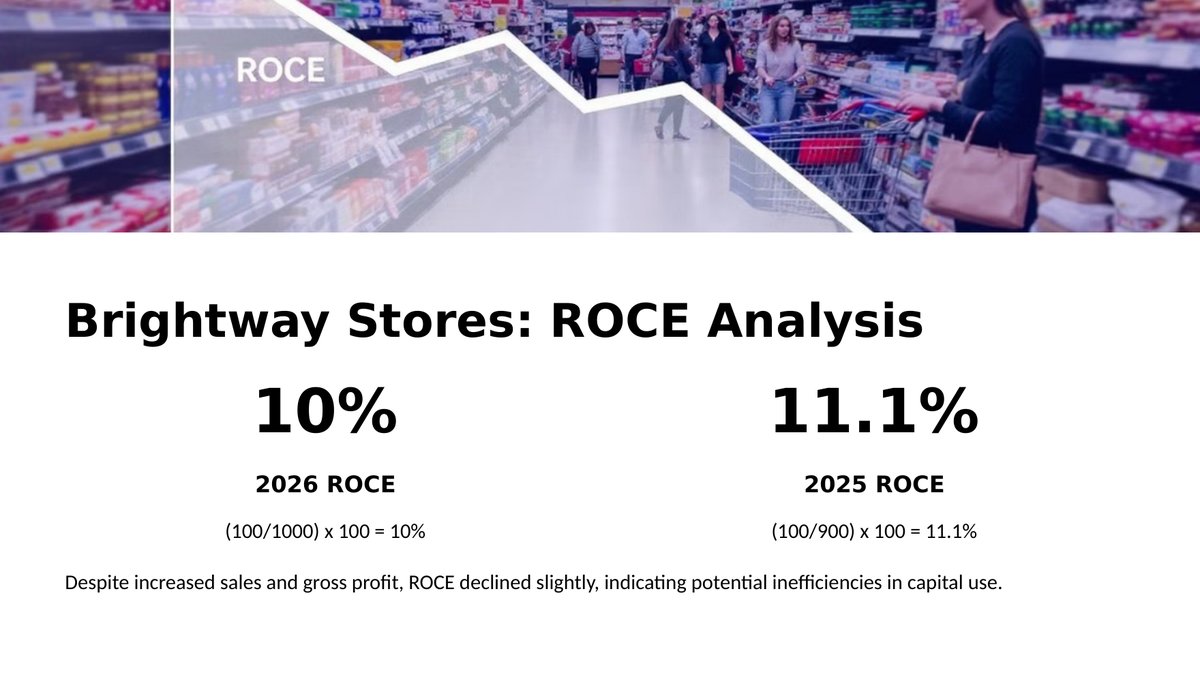
Profitability and liquidity as concepts, then each ratio on its own slide: gross profit margin, profit margin, ROCE, current ratio and acid test, with calculation practice and interpretation. Users of accounts get a slide per group, from owners to government and employees. The case study is Brightway Stores, where students calculate two years of margins and ROCE and decide whether a bank should lend. No embedded video.
Learning objectives
Taken from the objectives slide of the lesson, which follows the syllabus wording.
5.5.1 Profitability
- concept of profitability
- calculate and interpret the following profitability ratios: gross profit margin, profit margin, return on capital employed (ROCE)
5.5.2 Liquidity
- concept of liquidity
- calculate and interpret the following liquidity ratios: current ratio, acid test ratio
5.5.3 Users of accounts
- users of accounts and ratio analysis: internal, e.g. owners (sole traders, partnerships, shareholders), managers, employees
- users of accounts and ratio analysis: external, e.g. suppliers, government, lenders/banks
- how users of accounts may use financial information to help make decisions, e.g. whether to lend to or invest in a business
- limitations of using accounts and ratio analysis
What is in the lesson
The running order below is the deck as sold. Every lesson in the course follows the same shape: learning objectives, content slides with the real business examples, a learning check after each section, a case study with questions, key takeaways and an exit ticket. A teacher answer key (PDF), with model answers to every learning check, case question and exit ticket, is included when you buy the unit or the complete course.
Slide by slide (36 slides)
- Title slide
- Learning Objectives
- Learning Objectives
- Why Analyse Accounts?
- What is Profitability?
- What is Liquidity?
- What is a Financial Ratio?
- Importance of Financial Ratios
- Types of Financial Ratios
- Profitability Ratios
- Gross Profit Margin (GPM)
- Profit Margin
- Return on Capital Employed (ROCE)
- Calculating Profitability Ratios
- Liquidity Ratios
- Current Ratio
- Acid Test Ratio
- Interpreting Profitability Ratios
- Interpreting Liquidity Ratios
- Calculating Liquidity Ratios
- Improving Profitability
- Improving Liquidity
- Users of Accounts: Internal and External
- Owners' and Shareholders' Interests
- Managers' Interests
- Suppliers' Interests
- Banks' Interests
- Government's Interests
- Employees' Interests
- Learning Check – Users
- Limitations of Financial Ratios
- Case Study: Brightway Stores
- Analysing Brightway Stores
- Brightway Stores: ROCE Analysis
- Key Takeaways
- Exit Ticket
Where it fits
Weeks 33 and 34 of the 0264 scheme of work and pacing guide, which gives the course 46 weeks with a mock in week 41. Previous lesson: 5.4 Statement of Financial Position. Next lesson: 6.1 Economic Issues. All 28 lessons: Cambridge IGCSE Business 0264.
How to buy
The lesson on its own: 5.5 Analysis of Accounts on TES. The unit: Unit 5 Financial Information and Decisions. The whole course in one download: 0264 Complete Bundle. Lesson 1.1 is free with its answer key if you want to see the format first.