

4.4 Costs and Break-even: Cambridge IGCSE Business 0264 lesson
4.4 Costs and Break-even is one of the 6 lessons in Unit 4 Operations Management of Cambridge IGCSE Business 0264, for first examination in 2027. It is an editable PowerPoint of 32 slides written against syllabus sections 4.4.1, 4.4.2 and 4.4.3, with 1 embedded video case study, 3 learning checks and an exit ticket. Also suitable for Cambridge IGCSE (9-1) Business 0774 and Cambridge O Level Business 7081, which share the same content.
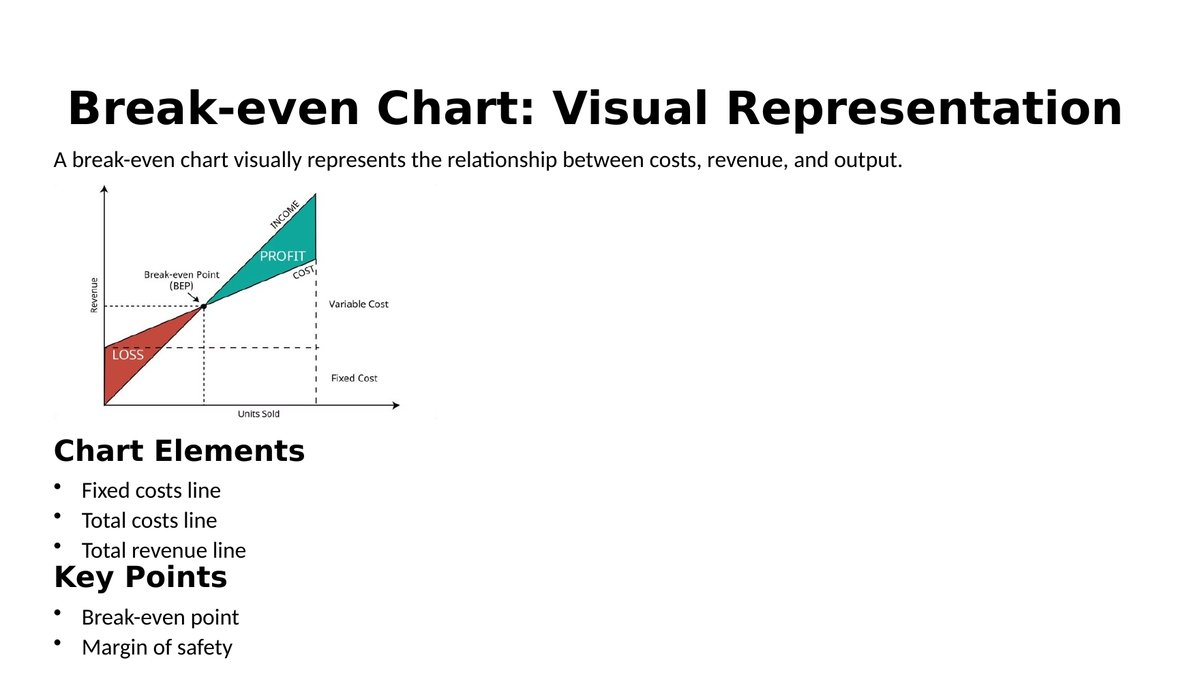
The lesson opens with a video where students note down every cost a business has, then classifies costs, uses cost data for decisions, and covers economies and diseconomies of scale. Break-even is taught through Fun Stilts and Co., a stilts manufacturer with a $10 selling price, $3 variable cost and $35,000 fixed costs: students calculate break-even output and margin of safety, then recalculate after a price cut, a rise in fixed costs and a change in variable cost. Completing, amending and reading break-even charts are covered, as the syllabus requires, and there are three learning checks.
Learning objectives
Taken from the objectives slide of the lesson, which follows the syllabus wording.
4.4.1 Identify and classify costs
- classify and calculate costs using examples, e.g. fixed, variable, average and total
- use cost data to help make simple decisions, e.g. which product to produce, whether to continue or stop production, what price to set, help choose suppliers
4.4.2 Economies and diseconomies of scale
- concept of economies of scale: purchasing, marketing, financial, managerial, technical
- concept of diseconomies of scale: poor communication, lack of commitment or loyalty from employees, weak coordination, lack of control
4.4.3 Break-even analysis
- concept of break-even
- complete or amend a simple break-even chart
- interpret a break-even chart
- calculate break-even output
- define, calculate and interpret the margin of safety
- use break-even analysis to help make decisions: effect of changes in price, changes in fixed costs, changes in variable cost per unit
- limitations of break-even analysis
What is in the lesson
The running order below is the deck as sold. Every lesson in the course follows the same shape: learning objectives, content slides with the real business examples, a learning check after each section, a case study with questions, key takeaways and an exit ticket. A teacher answer key (PDF), with model answers to every learning check, case question and exit ticket, is included when you buy the unit or the complete course.
Slide by slide (32 slides)
- Title slide
- Learning Objectives
- Learning Objectives
- Understanding Business Costs
- Question: As you watch, note down the costs this business has to cover. (video)
- Expansion and Economies of Scale
- Break-even Point: Key for Survival
- Fixed vs Variable Costs
- Calculating Total and Average Costs
- Using Cost Data for Decision Making
- Learning Check 1 – Costs
- Economies of Scale
- Diseconomies of Scale: Challenges of Growth
- Learning Check 2 – Economies and Diseconomies of Scale
- Break-even Point: Key Concepts
- Calculating Break-even Point
- Break-even Chart: Visual Representation
- Margin of Safety: Measuring Risk
- Break-even Analysis in Decision Making
- Limitations of Break-even Analysis
- Case Study: Fun Stilts & Co.
- Calculating Break-even for Fun Stilts & Co.
- Margin of Safety for Fun Stilts & Co.
- Impact of Price Reduction on Break-even
- Impact of a Rise in Fixed Costs
- Impact of a Change in Variable Cost
- Cost Reduction Strategies for Fun Stilts & Co.
- Completing and Amending Break-even Charts
- Interpreting Break-even Charts
- Reading the Margin of Safety from a Chart
- Learning Check 3 – Break-even Analysis
- Exit Ticket
Where it fits
Weeks 24 and 25 of the 0264 scheme of work and pacing guide, which gives the course 46 weeks with a mock in week 41. Previous lesson: 4.3 Sustainable Production. Next lesson: 4.5 Quality of Goods and Services. All 28 lessons: Cambridge IGCSE Business 0264.
How to buy
The lesson on its own: 4.4 Costs and Break-even on TES. The unit: Unit 4 Operations Management. The whole course in one download: 0264 Complete Bundle. Lesson 1.1 is free with its answer key if you want to see the format first.